The 7-stage selection process, real interview questions, and the strategies that get candidates hired — from a current airline pilot who's sat on both sides of the interview table.
Cathay Pacific runs Direct Entry Second Officer, First Officer, and Cadet Pilot recruitment. The full process typically takes 3–6 months from application to offer. Here's what to expect at each stage for Direct Entry roles.
Cathay reviews your licence, total hours, type ratings, medical, and ICAO English level against minimum requirements. Direct Entry Second Officers typically need 250+ total hours with a CPL/MEIR. Direct Entry First Officers need 1,500+ hours with 500+ on multi-crew aircraft above 20,000kg. Your application must match your logbook exactly — discrepancies are flagged immediately.
A standardised aviation English assessment evaluating pronunciation, structure, vocabulary, fluency, comprehension, and interactions. You must achieve Level 4 or above (Level 6 is native-level). Non-native English speakers should not underestimate this — it's a formal evaluation, not a conversation. Practice aviation phraseology and radiotelephony English.
A psychometric battery covering numerical reasoning, verbal reasoning, spatial awareness, multi-tasking (tracking + arithmetic + monitoring), memory, and reaction time. Also includes a personality questionnaire assessing teamwork, leadership, and stress tolerance. The content isn't difficult individually — doing everything simultaneously under time pressure is what catches candidates out. Practice aptitude tests beforehand.
A panel interview with Cathay pilots and HR. They alternate between behavioural/STAR questions and technical/operational knowledge — often switching without warning. This tests cognitive task-switching under pressure, exactly what happens in a real cockpit. They may ask about your current aircraft type, meteorology, aerodynamics, and Cathay-specific operational knowledge. The initial interview assesses both motivation and baseline technical competency.
A group exercise (typically 6–10 candidates) involving a discussion or problem-solving scenario — often a survival prioritisation or operational decision-making task. Assessors observe from the sidelines. They're evaluating communication, teamwork, leadership, and how you influence without dominating. Contribute, listen, build on others' ideas, and invite quiet candidates in. Aggressive dominance or complete disengagement gets you flagged immediately.
You'll be given a sim profile to study approximately 7 days before your assessment. The profile typically includes visual circuits, ILS to minima, hold entry, engine failure after V1, go-around, and possibly a non-precision approach. The sim type (B777 or A350) is assigned in advance. Scoring is heavily weighted toward CRM — brief everything, communicate throughout, and if your first approach is rough but you correct on the second, that's exactly what they want to see.
A final panel with senior Cathay management pilots. Deeper behavioural questions, career motivation, and a thorough assessment of whether you'll fit the Cathay culture. Expect questions about living in Hong Kong, your family's adaptation, and long-term commitment. Followed by an HKCAD Class 1 medical examination and comprehensive document verification — every page of your logbook may be checked.
Compiled from pilot community reports across PPRuNe, aviation forums, and candidate experiences. These are the questions candidates consistently report being asked at the panel interview and assessment stages.
Talk about the premium brand positioning, the modern widebody fleet (A350-900/1000, B777-300ER), the global network spanning 190+ destinations across 60+ countries, and the Hong Kong hub's strategic position connecting Asia with Europe, North America, and Australasia. Mention something specific: the A350 fleet renewal programme, Cathay's commitment to sustainability (SAF investments, carbon reduction targets), or the Second Officer career pathway. Avoid clichés about "good salary" — they want pilots drawn to the operation and the culture, not the package.
Use STAR format. Pick a real example where you identified a genuine safety issue and articulated it clearly. Show the graduated approach: observation → question → assertion. The outcome should demonstrate your intervention improved safety or the operational outcome — even if the captain made the final decision. Cathay is testing whether you'll speak up in a cockpit where authority gradients can vary, especially in a multicultural crew environment.
Cathay operates with crews from dozens of nationalities — this is not hypothetical. Show cultural awareness: different communication styles, authority gradients that vary by culture, and the importance of establishing a shared operational standard through the brief. Demonstrate that you adapt your communication style to the crew you're working with while maintaining the same safety standards. Give a real example and explain what you learned about adapting your approach.
Give operationally specific reasons: Cathay's Hong Kong hub offers one of Asia's most strategic connectivity positions, the fleet is younger than many legacy competitors (A350s are among the newest in the region), and the Second Officer pathway provides a structured career progression into long-haul widebody flying. The Swire-owned heritage means a distinct corporate culture focused on service excellence. Avoid criticising competitors — focus on what makes Cathay different and why that matters to you specifically.
Choose a genuine operational scenario — not a training exercise. Describe the situation briefly, then focus on how you managed: task prioritisation, CRM, maintaining situational awareness under pressure. Cathay wants to hear how you performed when things went wrong, not how you avoided stress. The debrief and lessons learned are as important as the actions you took. Show what you'd do differently next time.
Cathay operates a passenger fleet of approximately 179 aircraft: 35 B777-300ERs, 17 B777-300s, 18 A350-1000s, 16 A350-900s, A330-300s (being retired), and 16 A321neos (for regional routes). The B777-9 is on order. Cargo operations use B747-8F and B747-400ERF (Cathay Cargo is one of the world's largest cargo carriers). Know the engine types: A350 (RR Trent XWB), B777 (GE90), A321neo (PW1133G). Mention the A330 retirement programme and the B777-9 order pipeline.
Hong Kong's Kai Tak (former airport) was infamous for crosswind approaches, but even at the current Chek Lap Kok airport, windshear remains a critical hazard. The surrounding terrain (Lantau Island mountains) creates lee-side turbulence and windshear, especially during spring monsoon seasons and when tropical cyclones approach. The HKO (Hong Kong Observatory) operates a dedicated windshear alerting system using TDWR (Terminal Doppler Weather Radar) and LIDAR. Cathay expects candidates to understand why HK windshear is operationally significant and what alerting tools are available.
Swept-wing aircraft stall at the wingtips first (due to spanwise flow reducing effective airflow over the tips), which causes a forward pitch-up tendency (centre of pressure moves inboard and forward). This is dangerous because pitch-up increases the angle of attack, deepening the stall. Mitigations: wing fences, vortilons, leading-edge slats that extend further outboard, and stall stripes. The B777 and A350 use fly-by-wire with alpha protection to prevent stalls, but understanding the underlying aerodynamics is essential. Recovery: reduce angle of attack, apply thrust, level the wings.
Cold front: cold air advances under warm air, forcing it upward rapidly. Steep slope (1:50 to 1:100), narrow band of weather, cumulonimbus clouds, heavy showers, thunderstorms, sudden wind shift, sharp temperature drop, and good visibility after passage. Warm front: warm air overrides retreating cold air. Shallow slope (1:100 to 1:200), wide band of weather, gradual deterioration, stratus/nimbostratus clouds, steady rain, gradual temperature rise. On a met chart, cold fronts have triangles pointing in the direction of travel; warm fronts have semicircles.
South America. Cathay's network covers Asia, Europe, North America, Australasia, and Africa (limited). This is a classic Cathay knowledge test — they use it to check whether you've actually studied the route network. Know the major destinations: London, New York, Los Angeles, San Francisco, Sydney, Melbourne, Auckland, Frankfurt, Paris, Toronto, Vancouver, and key Asian cities. Also know that Cathay Pacific Cargo flies to additional freighter-only destinations.
This is not small talk — it's an attrition filter. Cathay invests heavily in training, and pilots who leave because they or their family couldn't adapt to Hong Kong are a major cost. Be honest but constructive. Real challenges: the extreme cost of housing (Hong Kong is one of the world's most expensive property markets), the density and limited living space, the summer heat and humidity, typhoon season (June–October), cultural adjustment, being far from family, and the cost and competitiveness of schooling for children. Show you've thought about the realities — and have a plan for each.
Cathay asks this because family adaptation is a leading reason pilots leave within the first few years. Have a real, specific answer: your partner's view, how you've discussed it together, research you've done about housing (Cathay provides a monthly housing allowance rather than company housing — understand the amount and what it covers), schools (education allowance is available for eligible officers, up to 90% of fees for dependants), healthcare, and social life. Vague answers signal you haven't had the conversation yet.
Be honest but constructive: the high cost of living in Hong Kong relative to the housing allowance, living in one of the most densely populated cities on earth, managing fatigue on ultra-long-haul sectors (Hong Kong–New York is ~16 hours), adapting to the Swire corporate culture which can be formal and hierarchical, and the intensity of a large-scale operation with both passenger and cargo fleets. Show that you've thought about the realities — not just the marketing. Candidates who pretend there are no challenges come across as naïve.
Cathay Pacific was founded in 1946 and is majority-owned by Swire Pacific — a diversified conglomerate with deep roots in Asia (trading, property, beverages, aviation). The Swire influence means a distinctive corporate culture: service excellence, long-term thinking, a formal but professional environment, and an emphasis on brand reputation. Cathay values pilots who embody this culture — professional, composed, and committed to the "One Class of Service" ethos on the flight deck. Understanding the Swire heritage shows you've done deeper research than just reading the route map.
Cathay wants to hear long-term commitment. A realistic path: Second Officer → Junior First Officer → Senior First Officer over 5–8 years, with eventual command at the ~10-year mark depending on fleet and seniority. Mention your interest in long-haul widebody operations, potential fleet transitions (A350 to B777X or vice versa), and contributions to the training or safety departments. Avoid mentioning any intention to use Cathay as a stepping stone to another carrier — they invest heavily in type ratings and expect loyalty in return.
You'll receive the sim profile approximately 7 days before your assessment. Study it thoroughly: know the aircraft type (B777 or A350), the specific sectors, profile parameters (speeds, configurations, altitudes), and any non-normal events embedded in the profile. On the day, brief every approach thoroughly — even if it feels excessive. State your intentions for the approach, missed approach procedure, and contingency plans. The assessor wants to see structured thinking and clear communication, not just flying ability.
Recognition comes through yaw toward the failed engine, a drop in N1/EPR on the EICAS, and potentially an alert. Immediate response: maintain the runway centreline with rudder — not aileron. Apply smooth, firm rudder opposite to the yaw. Continue the takeoff, rotate smoothly at VR, call "Positive rate" → gear up. Maintain V2 for best single-engine climb gradient. Do not attempt to identify or shut down the engine until established in a safe climb. Then: "Engine failure checklist when ready." The PM must confirm which engine failed — never shut down without PM confirmation.
Use the NITS briefing: Nature (passenger medical emergency, suspected cardiac event), Intentions (divert to nearest suitable airport with medical facilities), Time available (determined by passenger condition and medical advice), Special instructions (cabin crew actions, medical professional on board if any, priority handling request). First priority: confirm the situation with the cabin senior and determine if a medical professional is on board. Contact MedLink or equivalent medical support service for professional guidance. Evaluate diversion options by distance, facilities, weather, and fuel. Declare a PAN-PAN or MAYDAY as appropriate.
Cathay weights the simulator assessment heavily toward CRM. Brief everything. Communicate throughout. If you make a mistake, call it, correct it, and move on. Silence in the sim is the fastest way to fail. A candidate who maintains parameters within tolerance and communicates effectively will score well even if the initial correction was slightly late. Perfect flying with no communication will fail. The sim is testing whether you'll be a safe and effective crew member in the line, not whether you can hand-fly to ATP standards.
Based on dozens of candidate reports across pilot forums and communities, here are the patterns that separate successful Cathay Pacific candidates from those who are eliminated.
Assessors are frustrated by candidates who don't know the fleet composition, can't name major destinations, or confuse Cathay with another Asian carrier. Know the fleet (A350, B777, A321neo, A330), the Swire ownership, the cargo operation (one of the world's largest), and the B777-9 order pipeline. Study the route map — know the one continent they don't fly to.
Cathay weights the simulator heavily toward CRM. Brief everything. Communicate throughout. If you make a mistake, call it, correct it, and move on. Silence in the sim is the fastest way to fail. A candidate who talks through everything and flies to tolerance will beat a silent candidate who flies perfectly.
"How will your family cope?" is not small talk — it's an attrition filter. Cathay invests heavily in type ratings, and pilots who leave because their family couldn't adapt are a major cost. Understand the housing allowance system, schooling options, and the realities of living in one of the world's most expensive cities. Have specific answers about housing, schools, and lifestyle adaptation.
You'll be mid-sentence on a STAR answer about conflict resolution and get asked "What causes a swept wing to stall at the tip first?" This is deliberate — it tests how you handle cognitive task-switching under pressure, exactly what happens in a cockpit. Prepare as if it's two interviews happening simultaneously — human factors and technical.
You'll receive the sim profile about 7 days before your assessment. Use that time wisely. Study the aircraft systems, the profile parameters, and the expected non-normal events. Practise on a desktop simulator if you can — even basic spatial awareness practice helps. Arriving unprepared for the sim is the #1 reason candidates are eliminated at the final stage.
Every page of your logbook may be checked during the document verification stage. Discrepancies between your application hours and physical logbook are flagged immediately. Ensure your numbers match everywhere: application, CV, and logbook. Bring originals of licence, logbook, medical, and passport — plus copies of everything.
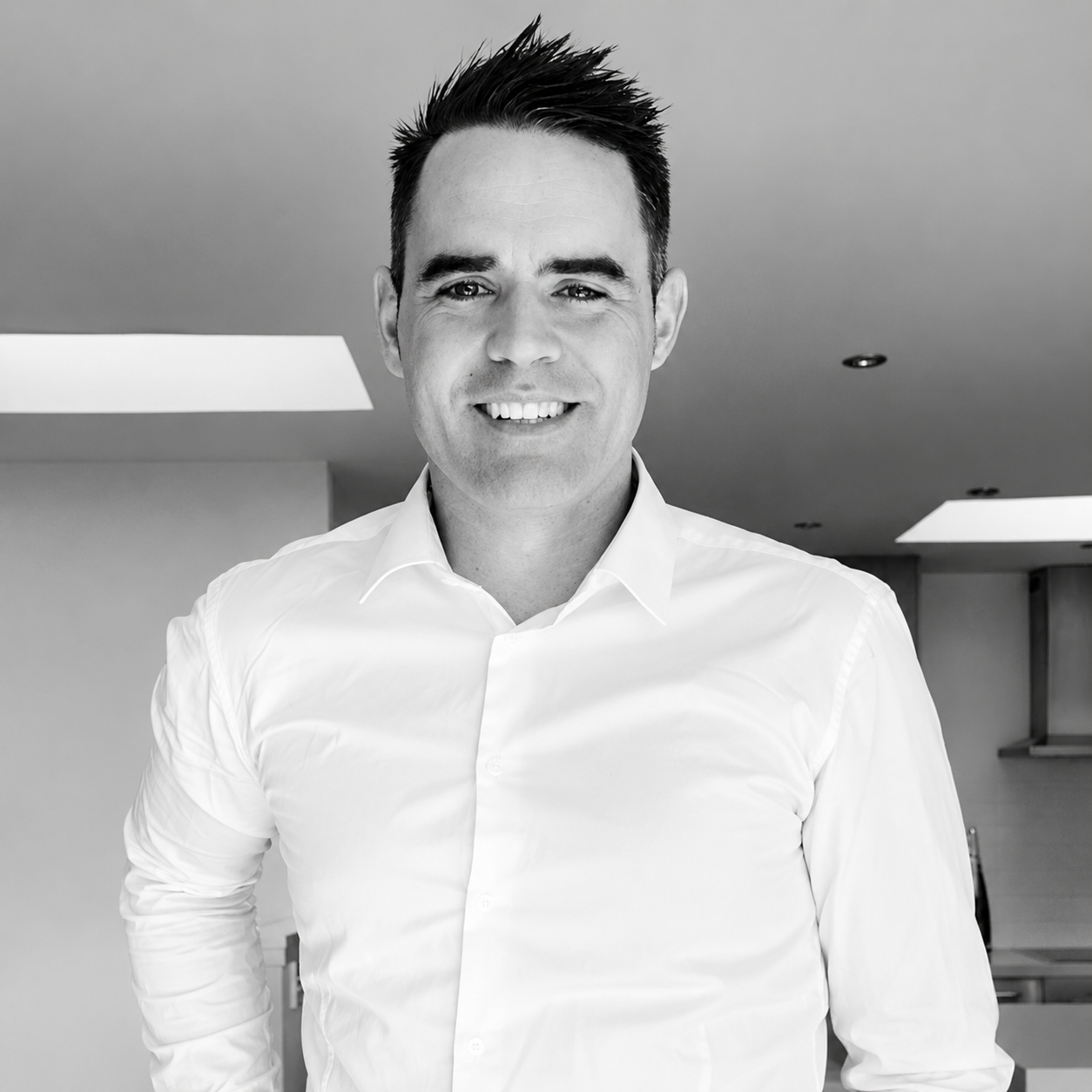
I'm a current B787 pilot and the founder of My Flight Deck Prep. I've sat 8 airline interviews as a candidate — all successful, with 2 of those being command upgrades. They include selections at Air New Zealand (Jet), Qantas Group, Virgin Australia, Jetstar, and National Jet Express.
I've also been on the other side of the table — not in aviation, but in professional hiring. In two separate team leader roles managing sales teams — first 6, then 15 people — I conducted interviews and made hiring decisions on every candidate. I know what assessors look for, what makes them lean forward, and what makes them write someone off. Those assessment skills transfer directly to airline interviews.
Competency-based interviewing is the same game whether you're assessing a pilot or a sales professional. The content differs, the assessment skills don't. That's the perspective I bring to your preparation — and it's why this guide is built on real experience, not generic advice.
Enter your email and we'll send you the full Cathay Pacific preparation checklist, a question framework for structuring your answers, and tips for each stage of the selection process.
Free. No spam. Unsubscribe anytime.
Reading about the process is one thing. Simulating it — with a current airline pilot giving you detailed feedback — is what gets you ready. Our Coaching Assessment mirrors the real Cathay Pacific panel interview format and gives you a personalised coaching report.
Book a Coaching Assessment